

How to Read a P&L Like an Operator
Most founders look at their numbers without really seeing them. Here's how to read a P&L the way someone who actually runs a company reads it.
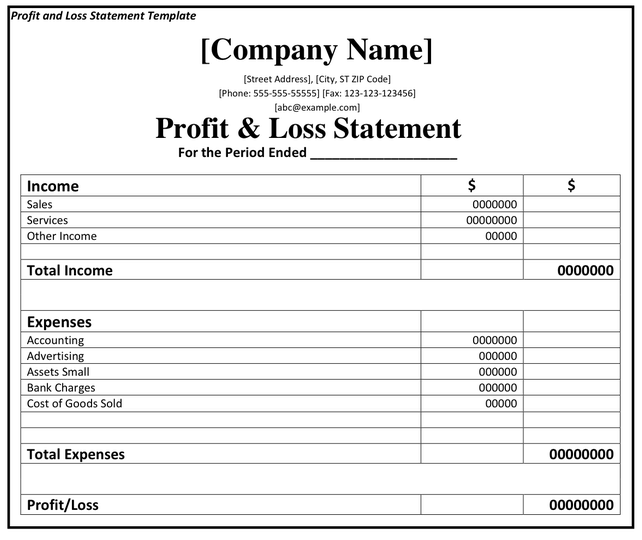
Most founders look at their numbers without really seeing them. They glance at the bank balance, look at top-line revenue, maybe check burn rate, and move on. This is not reading a P&L; this is checking a P&L. The difference matters because the operators who run the best companies have a relationship with their numbers that goes well beyond glancing.
Here's how to read a P&L like an operator.
Start with the structure, not the numbers. Before you read any specific figures, understand what categories your P&L is organized into and why. A standard P&L has revenue, cost of goods sold (COGS), gross profit (revenue minus COGS), operating expenses (sales, marketing, R&D, G&A), operating income (gross profit minus operating expenses), and net income (after taxes and interest).
Each layer answers a different question. Revenue tells you scale. Gross profit tells you whether your unit economics make sense. Operating income tells you whether your business model works. Net income tells you what's left after everything. Most founders default to looking at revenue and net income and skip the layers in between, which is where the actual insight lives.
The first ratio that matters: gross margin. Gross margin (gross profit divided by revenue) is the single most important number for understanding what kind of business you have. SaaS businesses typically have 70-85% gross margins. Consumer product businesses typically have 30-60%. Service businesses vary wildly but are often 40-60%. Marketplaces depend on the model.
If your gross margin is far off from the typical range for your category, that's information. Sometimes it means you're doing something unusually well. More often it means you have a problem you haven't fully understood — pricing, costs, or category positioning. Either way, knowing where you are relative to category benchmarks is the first step to managing it.
The second ratio: operating expenses as a percentage of revenue. Operating expenses break into roughly four buckets: sales and marketing, R&D (or product development), general and administrative, and sometimes a "other" category. The ratio of each to revenue tells you how the business is allocated.
For early-stage companies, the most informative one is usually sales and marketing as a percentage of revenue. High S&M ratios (50%+ of revenue) are normal for fast-growth SaaS but worrying for consumer brands or service businesses. Low S&M ratios (<10%) might mean you're capital-efficient or might mean you're underinvesting in growth. Knowing what's normal for your category and where you sit relative to it is essential.
The third ratio: cash conversion. This isn't on a standard P&L — you have to construct it from the cash flow statement — but it's the most important number most founders aren't looking at. Cash conversion is the gap between when you spend money to produce revenue and when you actually receive that money. For a service business, this might be 30-60 days. For a consumer product business, it can be 60-180 days because of inventory and accounts receivable. For a SaaS business with annual prepayment, it's often negative — customers pay before you spend.
The cash conversion cycle determines how much working capital you need to grow. A business with great unit economics but a 90-day cash conversion cycle can run out of cash while growing if it doesn't have enough working capital. A business with weaker unit economics but negative cash conversion can grow cash-positively. Most founders don't understand this until they're in a working capital crisis.
Look at the trend, not the snapshot. A single month's P&L tells you almost nothing. A year's worth of monthly P&Ls, looked at as a trend, tells you everything. Are gross margins expanding or compressing? Is sales and marketing efficiency improving or worsening? Is operating leverage starting to show up (revenue growing faster than expenses), or are expenses keeping pace with revenue?
The trend questions are the operator questions. The snapshot questions are the bookkeeper questions. Most founders ask bookkeeper questions and wonder why their financial intuition doesn't develop.
Compare to last year, last quarter, and last month — every time. Every time you look at this month's P&L, look at the same month last year, the previous quarter, and last month side-by-side. The story is in the comparisons, not the absolute numbers. "Revenue is $400K this month" is not information. "Revenue is $400K this month, up from $350K last month and from $280K the same month last year" is information — it tells you about acceleration or deceleration.
Build a forecast you actually update. Most early-stage companies have a financial model from the last fundraise that nobody has updated since. This is worse than having no model. The right practice is to maintain a rolling 12-month forecast that gets updated monthly with actuals, with explicit notes about what changed and why.
The discipline of updating a forecast is what builds operator-grade financial intuition. You start to notice which line items consistently surprise you (and which way), which assumptions don't hold up, where the business is more sensitive to which inputs. After a year of doing this, you'll have an instinctive feel for the financial structure of your business that nobody who outsources financial work to a bookkeeper or fractional CFO will ever develop.
The questions an operator asks every month:
- Is gross margin moving in the direction I expect, or is something I haven't caught starting to compress it?
- Is sales and marketing producing the revenue I expected per dollar spent? If not, what changed?
- Are operating expenses scaling with revenue, or is operating leverage starting to show?
- What was the cash conversion last month, and is it moving the right direction?
- What's the surprise in this P&L — the line item that's different from what I would have predicted? What's causing it?
The deeper point. The founders who run their companies well are not necessarily finance experts. They are founders who have built a relationship with their numbers — a habitual, instinctive engagement with the financial structure of their business that informs every decision. This is not the same as being good at accounting. It's the opposite of accounting; it's about using the numbers to understand the business.
The fastest way to build this is to spend an hour every week, for a year, looking at your numbers. Not preparing them — your bookkeeper does that. Looking at them. Asking what they mean. Asking what's changed. Asking what you would expect for the coming month and then checking whether your expectations were right.
By the end of the year, you'll have an operator's relationship with your business. Most founders never develop this, and most founders are surprised by their own businesses again and again as a result. Don't be one of them. Start this week.