
"Girlboss" Was Always Going to Collapse
The aesthetic ate the substance. What replaces it is more interesting than what it replaced.
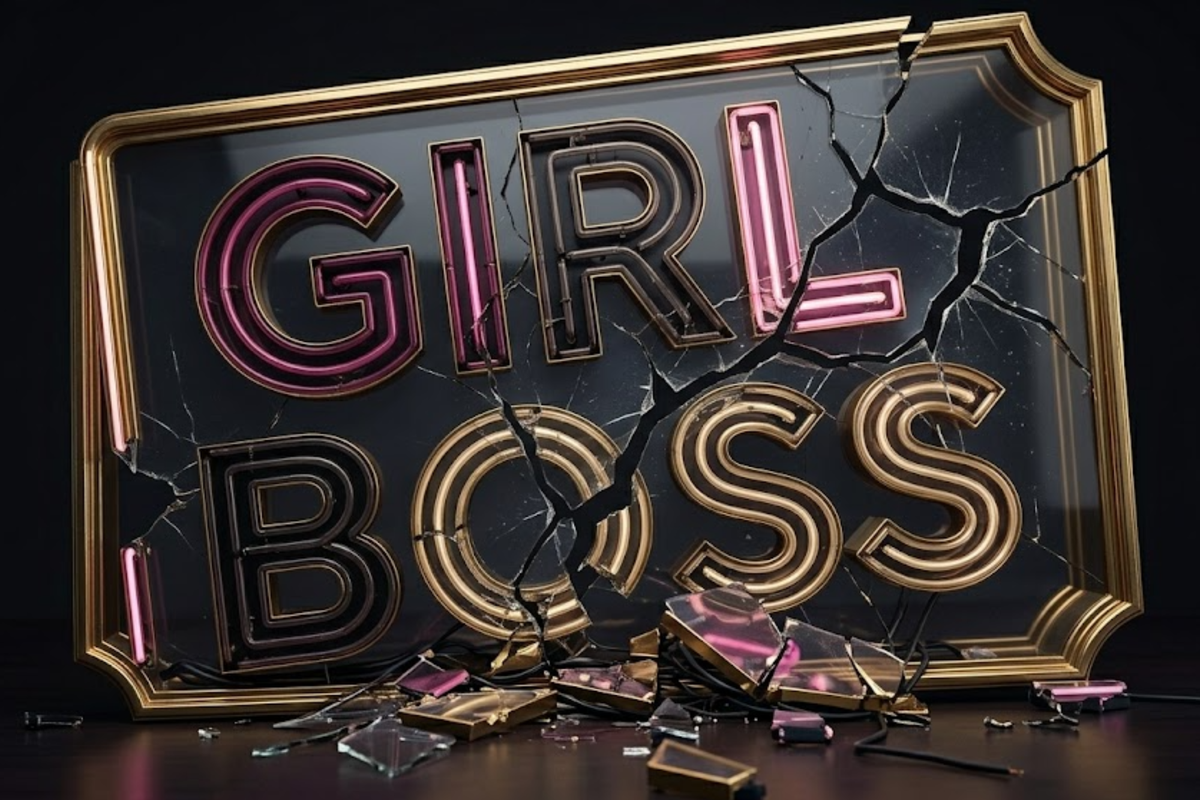
The girlboss era ended somewhere around 2020, and it's worth being clear about why, because the lesson keeps getting misread.
The standard postmortem is that the founders who became the face of the movement — Sophia Amoruso, Audrey Gelman of The Wing, Steph Korey of Away, Leandra Medine of Man Repeller — were exposed as bad bosses. Their companies had toxic cultures. Reporting at The Cut and Business Insider and elsewhere documented patterns of mistreatment that didn't square with the empowerment branding. The narrative cracked. The aesthetic curdled. The pink walls came down.
That's the surface read, and it's accurate as far as it goes. But it misses what was actually structurally wrong with girlboss culture as a business strategy, which is the part that's worth understanding because some version of it keeps getting reinvented.
The core problem was that girlboss businesses were built around the founder's personal brand in a way that conflated two things that shouldn't have been conflated: the company's values and the founder's marketing. When the founder was the marketing, criticism of the company became a personal attack on the founder, and any internal problem became a brand crisis. There was no room for the company to be a normal company — with normal management problems, normal turnover, normal mistakes — because the founder had built the brand around being the inspirational embodiment of what the company stood for.
This is a structurally fragile setup. Companies are messy. Management is hard. People who looked great on Instagram for three years are going to look bad eventually, because everyone looks bad eventually if you cover them long enough. The girlboss-era brands didn't have any insulation between the founder's image and the company's operating reality, and when the operating reality leaked, it took the brand down with it.
There's a version of this happening right now in the creator-founder space, and it's going to produce the same kinds of crashes. Founders building companies that are essentially extensions of their personal brand — the wellness brand built around the founder's lifestyle, the productivity company built around the founder's morning routine, the consultancy that's really a personal-brand vehicle — are setting themselves up for the same structural problem. When they have a bad year, the brand has a bad year. When they get into a public mess, the company gets into a public mess. There's no separation.
The smarter consumer founders of the last few years figured this out. Emily Weiss at Glossier had girlboss energy in 2017 and quietly retreated from being the face of the brand by 2021. Whitney Wolfe Herd at Bumble carefully positioned herself as the founder while building executive depth that meant the company could function without her in the spotlight. Skims is built around Kim Kardashian, but it's also built around Jens Grede, the operator-cofounder, in a way that gives the company a real identity beyond its celebrity face.
What replaced girlboss isn't quieter feminism. What replaced it is operator culture — founders who care more about how the company actually runs than about how it photographs. This is a much better mode for building durable companies, and it's the dominant mode among the most interesting women founders right now. Less manifesto, more margin. Less mission deck, more operations.
The aesthetic shift maps onto this. The girlboss-era office was photographable. The current operator-era office is just an office. The girlboss founder posted manifestos. The current operator founder posts about hiring or doesn't post at all. The girlboss company had a tagline. The current operator company has a P&L.
This is healthier. It produces better companies. It also produces less shareable content, which is part of why the girlboss era got so much oxygen — the content was great. The companies, in many cases, were not.
The lesson isn't that women founders shouldn't build personal brands. The lesson is that the personal brand should be a marketing tool the company uses, not the load-bearing wall the company is built on. Confusing the two — which is what the girlboss era did — produces companies that look incredible right up until they don't.
If you're building right now: Audit how much of your company depends on you personally. Customer relationships, operational decisions, brand voice, hiring, sales. Anything that would break if you took three months off is a fragility, not a feature. The best operators are working actively to make themselves less central to their companies. That's not weakness; that's how durable businesses are built.