
Books Every Founder Should Actually Read
Most founder reading lists are repeats of the same five books. Here's a reading list that will actually change how you think.
Founder reading lists tend to recommend the same handful of books. The Lean Startup. Zero to One. The Hard Thing About Hard Things. Good to Great. The Innovator's Dilemma. These are fine books. They are also widely read, widely cited, and at this point not very differentiating in how they shape your thinking.
Here's a reading list that's less obvious and, in our view, more useful. None of these are strictly "business" books in the traditional sense, but each will change how you think about what you're building, who you're working with, or how you're spending your time. A few are about business directly, a few about adjacent topics that turn out to be more relevant than the obvious choices.
1. Working by Studs Terkel.
Terkel interviewed dozens of Americans about what they actually did for a living and what they thought about it. The book is from 1974, and it's the best book ever written about what work means to people. If you employ anyone, this book will change how you think about the relationship between people and their jobs. It's also a masterclass in how to interview people — useful for any founder doing customer research, hiring, or sales.
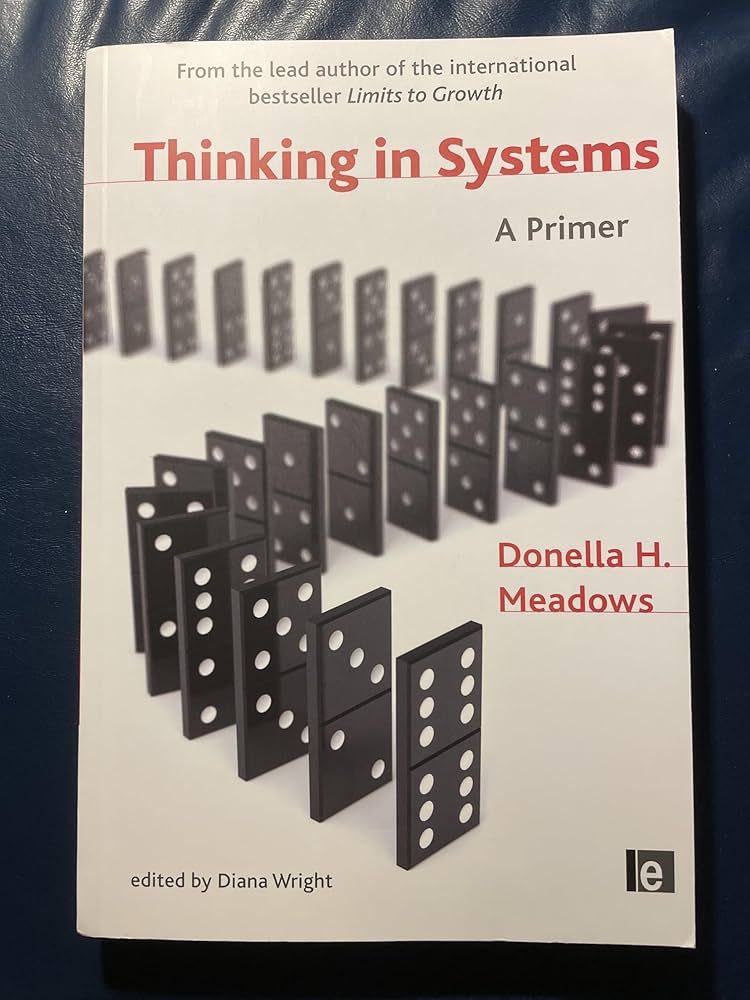
2. Thinking in Systems by Donella Meadows.
A short, accessible introduction to systems thinking that will permanently change how you understand cause and effect in organizations and markets. Most strategic mistakes are systems failures — feedback loops that produce unintended consequences, leverage points that are mistaken for problems, equilibria that look stable but aren't. Meadows teaches you to see them.
3. Discipline and Punish by Michel Foucault.
A genuinely difficult book that argues organizations are structured around surveillance and self-monitoring in ways most people don't notice. This sounds abstract until you start thinking about your performance management system, your office layout, your dashboards, and your one-on-one structure. Then it gets uncomfortable. Reading this won't tell you what to do; it will tell you what you're doing already and let you decide whether you actually want to.
4. The Goal by Eliyahu Goldratt.
A novel about a manufacturing plant manager that is secretly the best book on operations and constraint theory ever written. It teaches the theory of constraints — the idea that any system is limited by a single bottleneck, and improvements anywhere except the bottleneck are wasted effort — through a story compelling enough that you'll finish it in a weekend. Then you'll spend the next year identifying bottlenecks in your own business.
5. On Looking by Alexandra Horowitz.
A book about paying attention. Horowitz takes walks around a single block in Manhattan with eleven different experts (a geologist, an artist, a dog, a child) and writes about what they notice that she didn't. The lesson, applicable to almost everything in business: most of what's in front of you is invisible because you've stopped seeing it. The skill of looking again is one of the most underrated skills in any work.
6. Negotiation Genius by Deepak Malhotra and Max Bazerman.
The best book on negotiation, written by two Harvard Business School professors. Better than the more famous Getting to Yes because it's more specific, more practical, and more honest about how negotiations actually work. Useful for fundraising, for hiring, for sales, for partner deals, for almost any high-stakes conversation.
7. Status Anxiety by Alain de Botton.
A meditation on why people care so much about their status and what it does to them. The applied version of this book: most decisions in business and in life are downstream of status anxiety, and most strategic mistakes founders make are about status (raising more than they need to look successful, hiring expensive executives to look serious, expanding too fast to look ambitious). Recognizing status games is the first step to playing them less destructively.
8. The Effective Executive by Peter Drucker.
A short book by Drucker, who knew more about management than anyone, about how to actually be effective in a leadership role. Better than almost all modern management books because it strips away everything except the actual practices that produce results. Read it once a year. The repetition is the point.
9. Bird by Bird by Anne Lamott.
Ostensibly a book about writing. Actually a book about how to do hard creative work over a long time without losing your mind. The relevant chapter for founders is "Shitty First Drafts" — about the importance of getting something done badly so you can iterate toward getting it done well. This applies to far more than writing.
10. Economic Facts and Fallacies by Thomas Sowell.
A book that systematically dismantles widely-believed economic ideas using clear evidence and careful argument. Useful for founders not because of the specific economic content but because of the practice of thinking carefully about claims that "everyone knows are true." Most strategic mistakes are made by people who didn't question premises that turned out to be wrong.
11. Letters to a Young Poet by Rainer Maria Rilke.
A short book of letters that has nothing to do with business, and which we recommend to every founder anyway. Rilke writes to a young poet about how to live a life of meaningful work, how to handle uncertainty, how to find your own voice instead of imitating others. Founders going through hard moments — and there will be many — will find more useful guidance here than in any business book.
12. Creativity, Inc. by Ed Catmull.
The Pixar memoir, written by the co-founder. Of all the founder memoirs, this is the most useful because it's actually about how to manage creative people and creative organizations — which is what most companies are, even when they don't realize it. The chapter on the Braintrust, Pixar's internal feedback group, is worth the price of the book by itself.
The general point: the books that change how you think rarely come from the categories you'd expect. The most useful business reading is often not "business books." It's books about how people think, how systems work, how power operates, how attention is structured, and how meaning is made. Those things are what every business is actually built on, and most founders read shockingly little outside of business itself.
Pick three from this list. Read them this quarter. The ones that resonate will keep producing returns for years.