Anne Wojcicki and the Long Arc of 23andMe
A company that once represented the future of consumer health is now a cautionary tale. The lessons are more useful than the obituary.
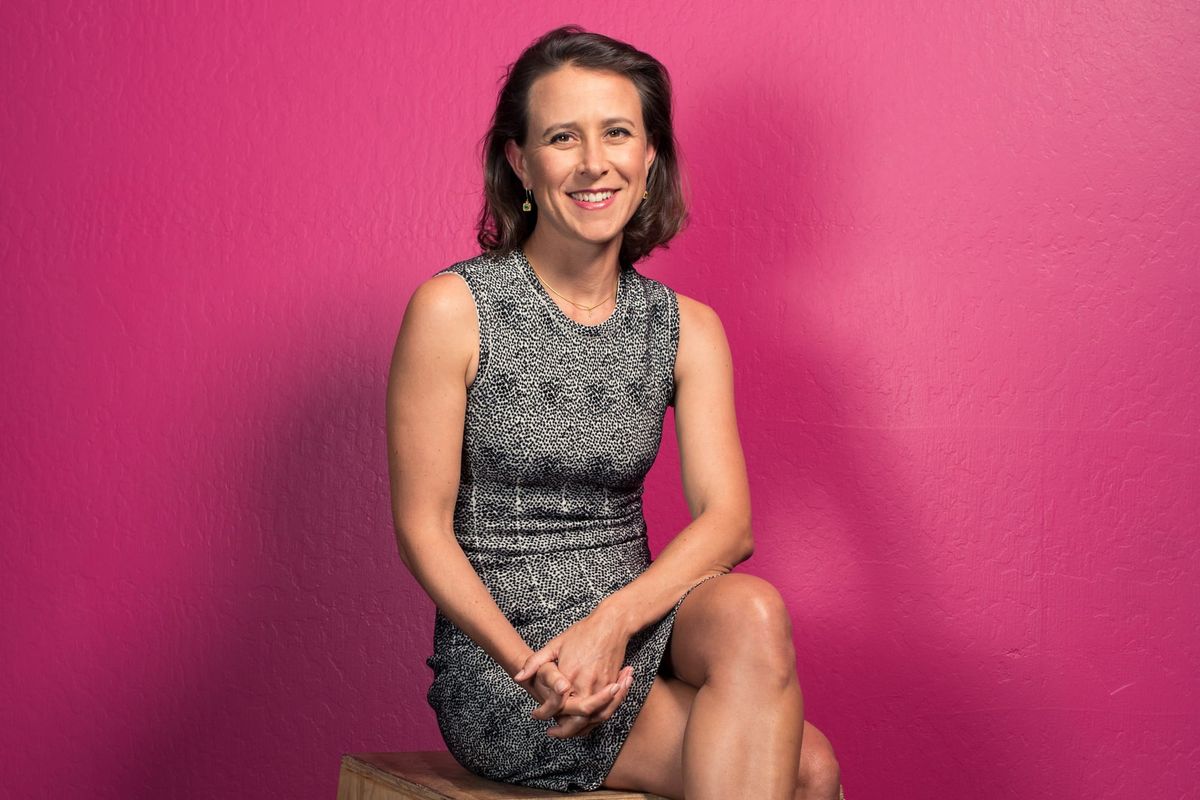
Anne Wojcicki founded 23andMe in 2006 with a thesis that has since become accepted wisdom: that consumer-direct genetic testing would be a major business, that genetic data could power both consumer products and pharmaceutical research, and that there was room for a brand-driven company to own the category. She was right about all three things, and the company still ended up in serious trouble.
The arc is worth understanding because it is one of the cleanest examples of what happens when a company gets the macro thesis right and the operational execution wrong. 23andMe achieved enormous brand recognition, sold millions of kits, generated genuinely useful data, and became a public company in 2021 through a SPAC at a multi-billion-dollar valuation. By 2024, the stock had collapsed, the company had laid off most of its workforce, the board had resigned en masse, and Wojcicki was attempting to take the company private at a fraction of its peak value.
The standard narrative blames the SPAC structure, the pandemic-era hype, and a major data breach in 2023 that affected millions of users. All three are real factors. But the deeper problem was structural to the business model from the beginning, and it's worth examining because similar problems exist in many consumer-data companies being built today.
The core issue: 23andMe sold a one-time product (the genetic test kit) but needed ongoing revenue to support the business. The company tried to solve this in two ways. First, by building subscription products that gave existing customers a reason to keep paying — health reports, ancestry updates, premium features. Second, by monetizing the genetic database through pharmaceutical research partnerships, most notably a major collaboration with GlaxoSmithKline.
Both monetization strategies were structurally hard in ways that took years to become visible.
The subscription business never produced the recurring revenue the company needed because customers had already gotten the most interesting result from the initial test. Once you know your ancestry breakdown and your major health risk markers, the marginal value of additional reports is small. Subscription churn was high. Customer lifetime value was lower than the company's growth rates implied. This is the same problem that took down many DTC subscription businesses of the same era — the product was great, but the model required ongoing engagement that the product didn't naturally produce.
The research monetization was also harder than expected. Pharmaceutical companies are willing to pay for high-quality genetic data, but they're sophisticated buyers who don't pay quickly or easily. The GlaxoSmithKline partnership generated meaningful revenue but did not scale into the dominant revenue stream the company needed it to be. And the pharmaceutical research model created a permanent tension with consumer trust — customers had given their genetic data to learn about themselves, and they were not always thrilled to learn it was being used as the foundation of a research business.
The 2023 data breach, in which hackers accessed information from millions of customers, accelerated everything that was already going wrong. Trust in genetic-data companies is uniquely fragile because the data is uniquely sensitive. The breach didn't just damage 23andMe; it damaged the entire premise that consumers should trust commercial companies with their genetic data, which made everything harder for the company to recover.
What's worth taking from the arc, separate from the specific industry context, is the way macro-thesis-correctness can mask operational problems for years. 23andMe was right about consumer genetics. The category exists, has grown, and will continue to grow. But being right about the category was not enough to build a sustainable business in it, because the unit economics, the customer behavior, and the trust dynamics produced a much harder operating challenge than the macro thesis suggested.
This is a pattern in many consumer-data businesses. The macro story is compelling: data is valuable, customers will share it for value, the data can be monetized in multiple ways. The operational reality is that the customer side of the business has different economics than the data-monetization side, the two sides have to be balanced delicately, and one side can poison the other if not managed carefully.
For founders building in adjacent spaces — consumer health, consumer-genomics, longevity, mental health, fertility, anywhere where consumer data has commercial value — the 23andMe lessons are uncomfortable but useful.
Don't assume the macro thesis solves the operating problems. Being early to a category that's clearly going to be big does not mean the path to building a sustainable business in it is clear. The operating challenges may be larger than the category-creation challenges, and they may not be solvable by the same playbook that won the early lead.
Build subscription value carefully when the underlying product is one-time. This is harder than founders typically think. The features that produce ongoing engagement are often different from the features that produced the initial sale, and they require dedicated product investment that founders often skip when the initial product is going well.
Treat consumer trust as a fragile asset with explicit operational protection. The companies that have survived consumer-data crises are the ones that took data security and consumer privacy seriously from the beginning. The ones that treated it as a compliance afterthought have generally not survived. Trust, once damaged in this category, is extremely hard to rebuild.
Be honest about the relationship between consumer-facing and B2B revenue streams. Companies that try to be both consumer brands and B2B data businesses simultaneously face permanent tension between the two missions. Sometimes it can be managed; sometimes the tensions destroy the company. Going in with eyes open about the difficulty is essential.
Wojcicki's career still has chapters to be written. The take-private effort, if it succeeds, may give the company room to rebuild outside the public-market spotlight. The genetic data and the brand still have value. But the trajectory from 2006 to now is a case study in how getting the macro right is necessary but not sufficient — and how operational execution determines whether the macro thesis ever pays off.
The lesson for founders building in any data-rich, trust-sensitive category: the operational details matter more than the macro thesis. The macro thesis just gets you to the starting line.